 |
The Sasse: Where love stories develop between art and viewer |
||||
|
|||||
|
|||||
The Space Between |
|||||
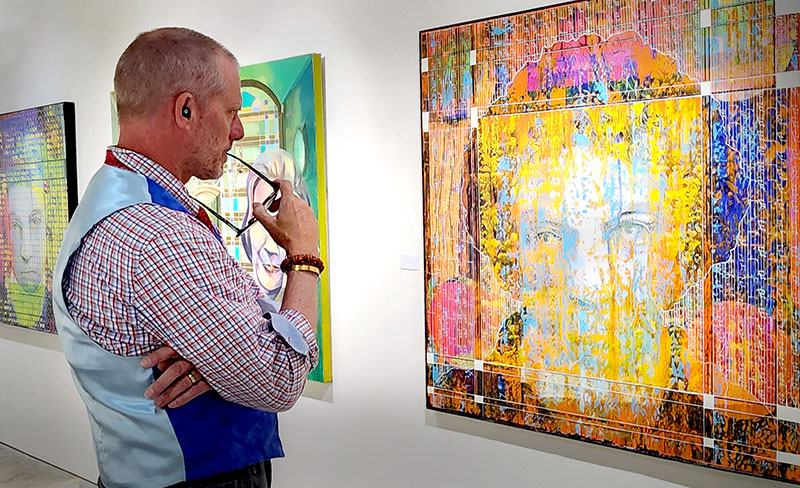
There is a moment every artist knows, though few name it aloud. It comes at the end of making something. The painting is finished, the photograph printed, the sculpture released from the last touch of the hand. In that moment, the work begins its separate life. It will go where you cannot follow. It will mean things you did not intend. It will move people in ways you will never witness, and leave others untouched in ways you cannot explain. For a long time, I thought of this as loss. I have spent decades behind a camera, working with the discipline that large format film demands. You see the image on the ground glass, inverted and luminous, and you make your decisions before you ever press the shutter. Exposure, composition, light. There is a precision to it that feels like control. And then you release it, and the control ends. What I have come to understand, slowly and not without resistance, is that the release is not the failure of the work. It is the completion of it. The artist must be inside the work to make it. That absorption, that commitment to a private vision, is what gives the work its particular gravity. But the viewer must be free of that vision to receive it. They bring their own history, their own losses, their own particular way of standing in a room. When a work moves them, it is not because the artist's intention reached them intact. It is because something in the work met something in them, in a conversation the artist was not present for. The gap between what is made and what is received is not a wound. It is the condition that makes genuine encounter possible. This is why the Sasse Museum has always understood its role as creating conditions rather than providing conclusions. We do not ask you to feel what the artist felt. We do not stand between the work and the viewer with explanations. We hold the space, and trust that what happens in it belongs to the person standing there. The tagline we chose for this museum, that this is where love stories develop between art and viewer, was not written as marketing. It was written as a confession of belief. Love stories are not controlled. They happen in the space between two separate beings, neither of whom fully understands the other, both of whom are changed by the encounter. You may not be able to see both sides at the same moment. The artist cannot fully occupy the viewer's experience, and the viewer cannot fully occupy the artist's intention. But perhaps that is exactly right. Perhaps the work lives in the irresolution, in the honest acknowledgment that meaning is not transferred but discovered, separately, by each person who stands before it. form the collection: Kids | 5x3.25x3 clay | 274.15.11 |
|||||

|
|||||
|
|||||