 |
The Sasse: Where love stories develop between art and viewer | ||||
|
|||||
The Gap |
|||||
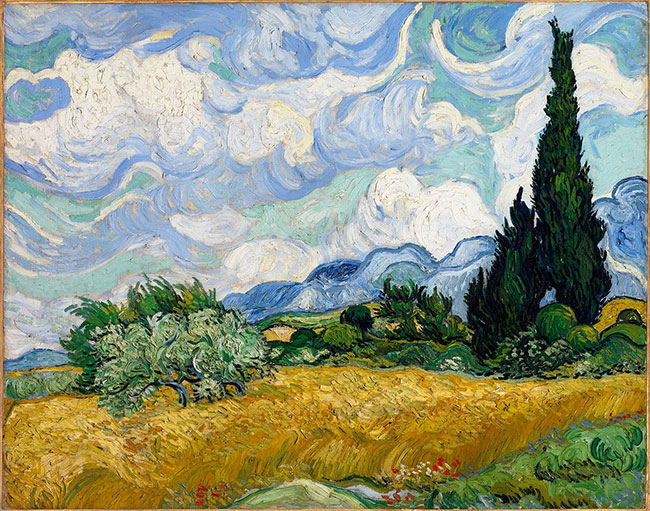
"I am always doing what I cannot do yet, in order to learn how to do it." — Vincent van Gogh We are taught to learn first and do after. Study the thing, then attempt it. Van Gogh puts the order the other way. He does the thing he cannot do, and the doing is how he learns it. The attempt comes before the ability. The failure comes before the skill, and makes it. Read the sentence slowly and one word carries all the weight. Yet. Without it, the line is despair. I am always doing what I cannot do. With it, the line is patience. "Yet" promises nothing. It does not say you will arrive. It only says which way you are facing while you fall short. Here is the part we would rather not hear. The gap does not close. You would think that with enough years the hand catches up to the eye and the falling-short ends. It does not. The eye keeps rising. The moment your skill reaches what you once imagined, you imagine further. Your taste outruns your hand and always will, because taste costs nothing and skill costs everything. So the distance between what you can see and what you can make stays open for a lifetime. So the question is not whether you can do it yet. You cannot, and some part of you never entirely will. The question is whether you will keep reaching. Whether you can hold the distance between your eye and your hand and not call it defeat. That is the work. Not the day you can finally do it. The doing of what you can't. Vincent van Gogh | Wheat Field with Cypresses 1889 |
|||||

|
|||||
|
|||||